
Why are prefab containers the smartest way to build housing for staff or tenants?
- Unmatched speed and efficiency
- Significant cost savings
- Portability and flexibility
- Durability and safety
- Sustainability
Overview
- Prefab container housing at Indigo Prefab House offers a way to respond quickly while retaining the ability to expand, relocate, or adapt units over time.
- By prioritizing speed, cost control, and adaptability, this approach helps organizations meet immediate housing demands without locking projects into rigid, long-term build cycles.
Housing projects for staff or tenants often exceed budgets once construction begins. Material price fluctuations, schedule delays, and on-site coordination issues can quickly disrupt even well-planned developments, making cost control and timelines difficult to manage.
Alternative solutions such as prefab containers offer a more structured way to approach staff accommodation development. Instead of relying entirely on traditional on-site construction, this approach introduces a more streamlined and controlled build process that supports faster project delivery and more predictable execution.
In this article, we’ll take a closer look at prefab containers are the smartest way to build housing for staff tenants, and how this approach supports more efficient, scalable rental and workforce housing solutions.
Unmatched Speed and Efficiency
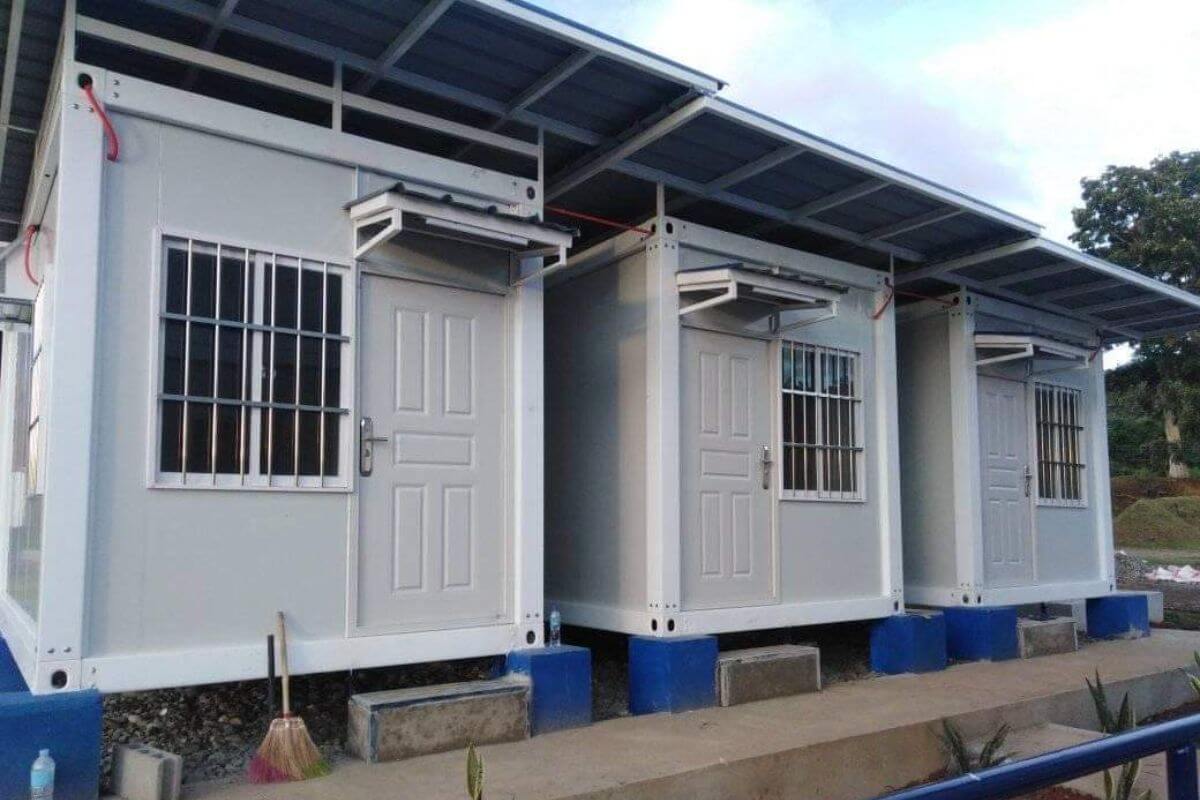
Speed is one of the most critical advantages of prefab container housing. Because the core structure is manufactured off-site, site preparation and unit fabrication can happen simultaneously.
This overlap significantly shortens project timelines compared to conventional construction methods that rely heavily on sequential processes.
Once delivered, container units can be assembled and made ready for occupancy in a predictable timeline. This rapid deployment is especially valuable for organizations facing urgent housing needs or seasonal workforce demands.
Significant Cost Savings
Prefab container housing offers meaningful cost advantages by reducing labor requirements, material waste, and construction time.
Off-site fabrication allows for controlled manufacturing conditions, minimizing inefficiencies and unexpected expenses commonly encountered on traditional building sites.
Additionally, faster project completion reduces indirect costs such as prolonged site supervision, equipment rentals, and delayed operations. This factor supports the idea behind why prefab containers are the smartest way to build housing for staff or tenants.
Portability and Flexibility
Unlike permanent structures, prefab container housing is designed to move with changing needs. Units can be relocated, reconfigured, or expanded without extensive demolition or reconstruction.
This portability makes container housing ideal for industries with shifting project sites or evolving space requirements. Rather than rebuilding from scratch, organizations can redeploy existing units.
Durability and Safety
Prefab containers are built from structural steel designed to withstand heavy loads and harsh conditions. When properly modified for residential use, these units meet safety standards for structural integrity.
Reinforced framing, fire-rated materials, and proper insulation ensure that container housing provides safe and reliable living environments.
This durability makes prefab containers suitable not only for temporary use but also for long-term staff or tenant accommodation.
Sustainability
Sustainability is an increasingly important factor in housing decisions. Prefab container housing supports sustainable construction by repurposing shipping containers and reducing the need for raw construction materials.
Controlled fabrication also results in less waste and lower environmental impact compared to traditional builds. For organizations seeking to align housing projects with sustainability goals.
Comfort and Utility Considerations for Prefab Housing
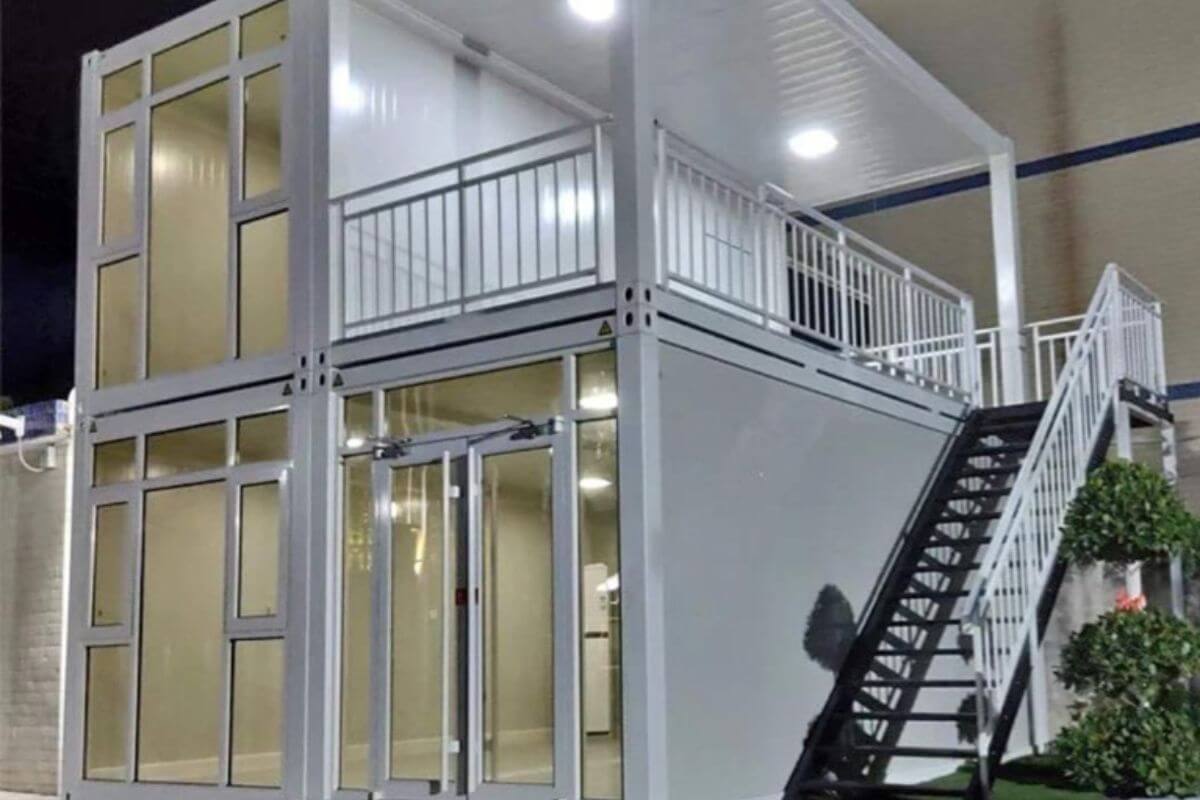
Making sure that a structure is livable is a critical factor when evaluating prefab housing solutions. While speed and flexibility are key advantages, long-term performance depends on how well housing considerations are integrated.
Insulation
Insulation plays a major role in keeping prefab housing comfortable and energy-efficient, especially in climates where heat buildup can affect livability. When insulation is properly integrated into walls and roofing, it helps stabilize indoor temperature and reduces strain on cooling systems.
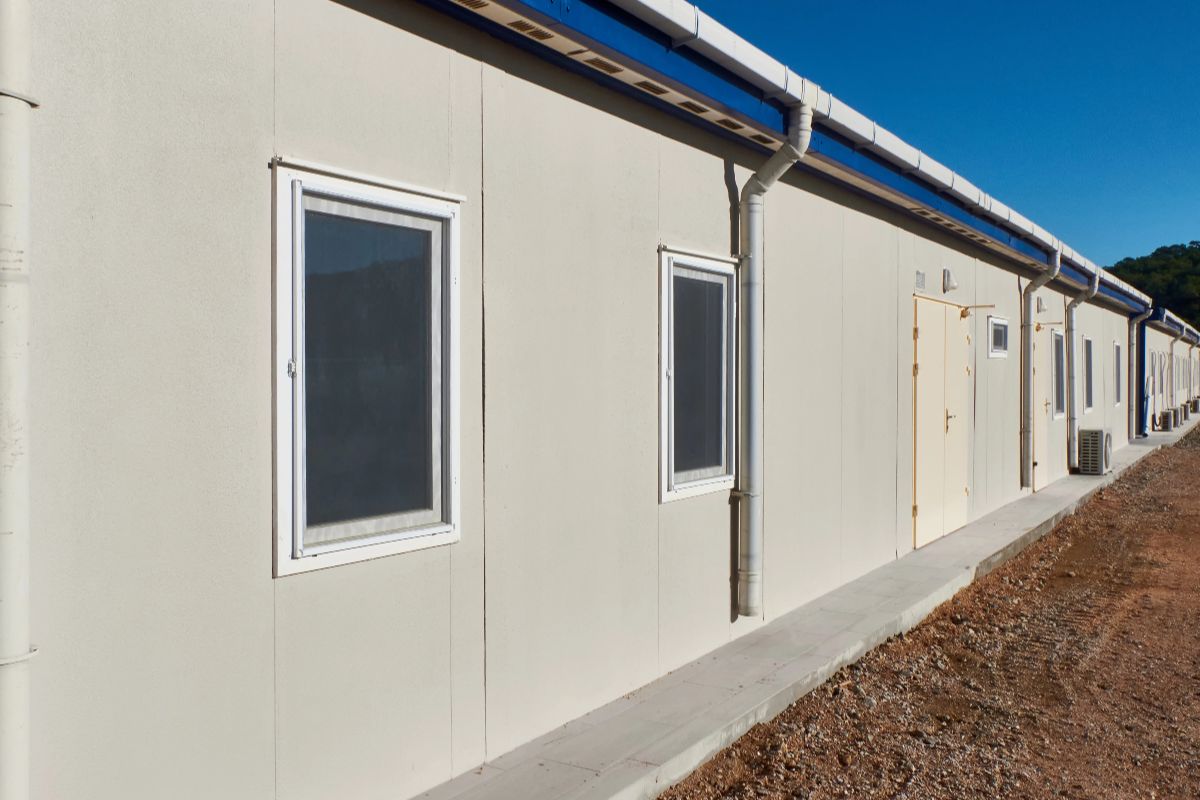
At Indigo Prefab House, insulation is commonly achieved using sandwich panels with EPS (expanded polystyrene) insulation, applied to both walls and roofing
Ventilation
Ventilation supports airflow, reduces heat and moisture buildup, and improves indoor comfort for staff or tenants. In prefab housing, ventilation planning is usually a combination of natural airflow points and optional mechanical systems, depending on the unit use and site conditions.
For Indigo Prefab House units, ventilation is typically supported through installed openings like sliding windows or an integrated air ventilation system for certain applications.
Utility Connections
Utility planning plays a major role in the functionality of prefab housing. Electrical, plumbing, and ventilation systems must be designed for easy integration with local infrastructure.
Properly engineered utility connections reduce installation time and minimize disruptions during setup. They also allow units to be disconnected and reconnected efficiently when relocation is required.
Installation Logistics
Successful prefab housing deployment depends on coordinated installation logistics. Site preparation, transport access, and foundation requirements must be assessed before delivery.
Clear installation planning ensures units are placed securely and operational immediately. This efficiency supports faster occupancy and reduces downtime for staff or tenants.
Key Takeaway
Prefab containers are the smartest way to build housing for staff or tenants because they offer value speed, cost efficiency, and adaptability. By enabling these advantages, these modular structures address the real-world challenges of housing in dynamic environments.
For projects where timing and scalability matter as much as permanence, Indigo Prefab House offers container housing. Our solutions are practical, future-ready alternatives to traditional construction methods. Contact us today so we can coordinate your housing needs at your earliest convenience.
Share on


Most Viewed Posts
Prefab Office vs Traditional Construction: Cost Comparison
Read More
When Does Your Project Need a Modular Office?
Read More
Why Businesses in Cebu City Are Choosing Mobile Offices
Read More
Common Workplace Challenges in Cebu City Construction and Industrial Sites
Read More
What to Consider Before Buying a Prefab Container Site Office
Read More