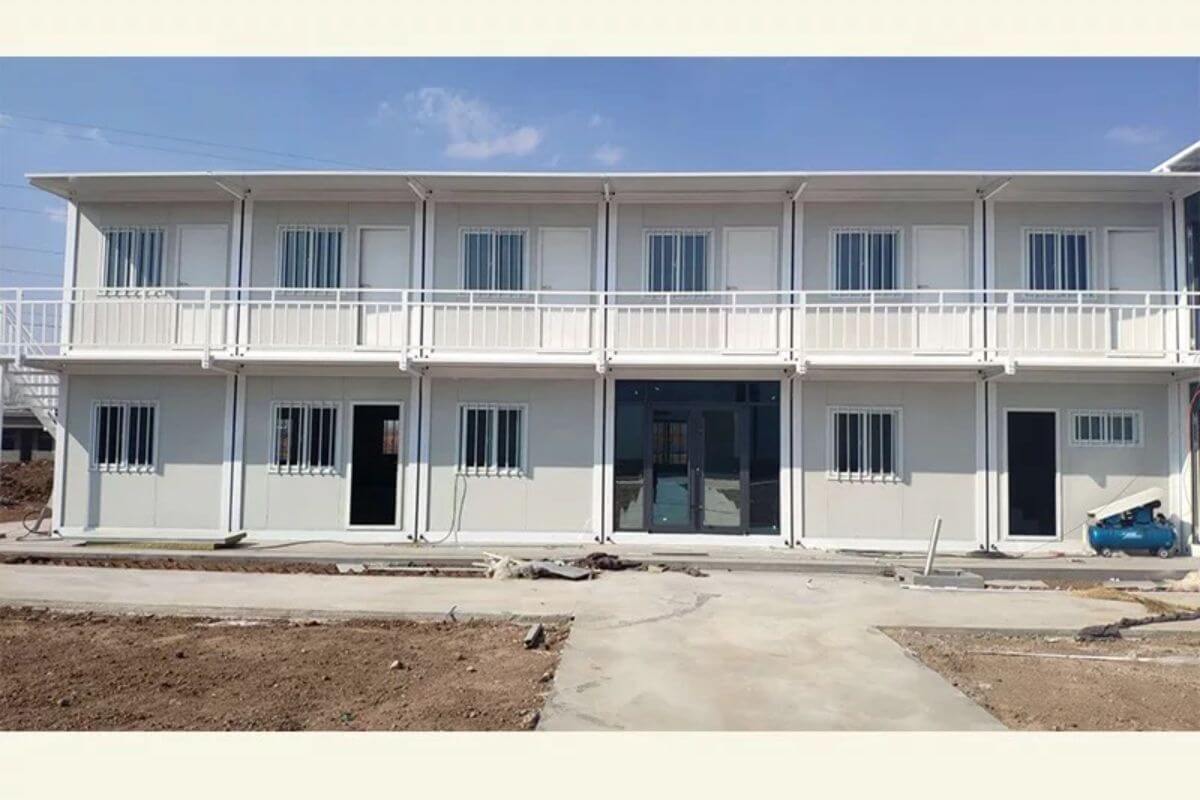
What industries use expandable prefabricated buildings?
- Construction and industrial
- Commercial and retail
- Tourism and residential
- Education and public facilities
- Emergency and disaster relief
Overview
- The article explains how expandable prefab buildings have become a practical solution across industries in the Philippines, addressing space constraints in construction, retail, tourism, education, and disaster relief.
- It highlights how these modular units enable faster deployment, scalability, and operational efficiency while supporting growing demand and urgent infrastructure needs.
As global sectors pivot toward leaner, more agile operational models, prefabricated modularity has transitioned from a niche, short-term fix to a cornerstone of modern infrastructure. These high-performance units are engineered to bridge the gap between rapid deployment and long-term structural integrity—providing a sophisticated solution for environments where traditional construction is either too slow or too rigid to be viable.
Far surpassing the limitations of legacy modular design, today’s units function as resilient, permanent-grade environments. To understand the full scope of this shift, we must look at the specific industries that use expandable prefab buildings to redefine operational readiness and scale at the speed of demand.
Construction And Industrial
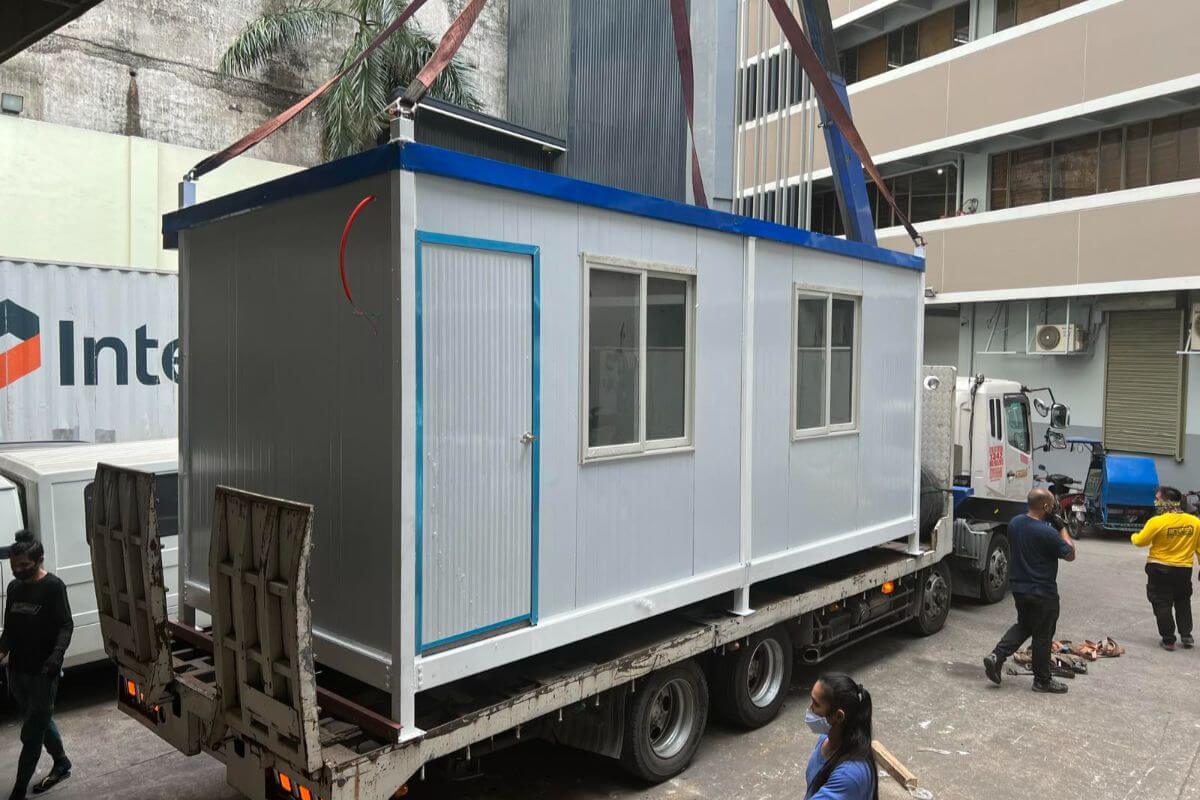
Tight project timelines and changing site conditions make it challenging to establish reliable on-site facilities. In many parts of the Philippines, especially in remote or large-scale developments, building offices, worker accommodations, and storage areas from scratch can delay operations and increase costs.
Expandable prefab buildings provide a faster, more efficient solution. They can be deployed quickly, adapted as needs change, and used as site offices, staff housing, or secure storage to keep operations running.
This is especially valuable in provincial projects such as road developments in Northern Luzon or mining operations in Mindanao, where immediate, functional facilities are essential.
Commercial And Retail
Retail and commercial businesses often face challenges when expanding due to the time and cost of traditional construction. A more adaptable approach enables faster setup and easier scaling, making modular units suitable for pop-up stores, showrooms, and satellite offices.
This is particularly valuable in high-traffic areas such as Metro Manila and Cebu, where businesses can establish operations in mall-adjacent or tourist-heavy locations without long construction timelines.
To support this need for speed and flexibility, Indigo Prefab’s 36 sqm mobile unit features factory-fitted interiors, a compact transport design, and quick assembly upon delivery. It supports efficient deployment, easy relocation, and practical use as business requirements change over time.
Tourism And Residential
Tourism and residential demand continue to rise, placing pressure on available space. In 2026, tourism is valued at USD 24.8 billion with 6.3 million expected arrivals, while residential growth holds steady at 7 to 8 percent, driven by urban and suburban expansion.
As demand accelerates, capacity gaps become more evident. Resorts in areas like Palawan and Cebu face seasonal surges, while residential developments work to keep pace with growing occupancy needs. The rise of condo-hotels further reflects this overlap between short-term stays and long-term living.
To address this, a more flexible approach becomes essential. Modular units can serve as accommodations or housing, then adjust as demand shifts over time.
Education And Public Facilities
The country continues to face gaps in educational and public infrastructure, including classroom shortages, limited access to utilities, and a lack of essential community facilities such as libraries and multi-purpose halls.
These challenges are most evident in rapidly growing and underserved areas, where increasing populations strain already limited resources. As a result, institutions often struggle to accommodate students and deliver basic services efficiently.
Within industries that use expandable prefab buildings, educational institutions and public service providers benefit from faster and more scalable solutions. These structures can be deployed as classrooms, administrative offices, healthcare units, or community hubs, helping address space constraints without long delays from traditional building methods.
Emergency And Disaster Relief
Highly prone to natural disasters due to its location along the Pacific typhoon belt, the country experiences multiple strong typhoons each year. Events such as Typhoon Ragasa in 2024, which severely affected Cagayan and nearby islands, demonstrate the scale of devastation that can displace hundreds of thousands of families and create urgent shelter needs. In many cases, relief efforts struggle to keep pace, with only a limited portion of damaged homes receiving immediate support, leaving many communities in temporary, often unsafe conditions.
With a compact folding design for transport, expandable prefab structures can be quickly deployed as evacuation centers, temporary shelters, medical stations, or command hubs.
Indigo’s Prefab Houses delivers rapid-response units that fold for transport and expand on-site, with dimensions of 5650mm × 2250mm × 2800mm when closed and 5650mm × 6508mm × 2800mm when fully deployed.
Why Industries Choose Expandable Prefab Building
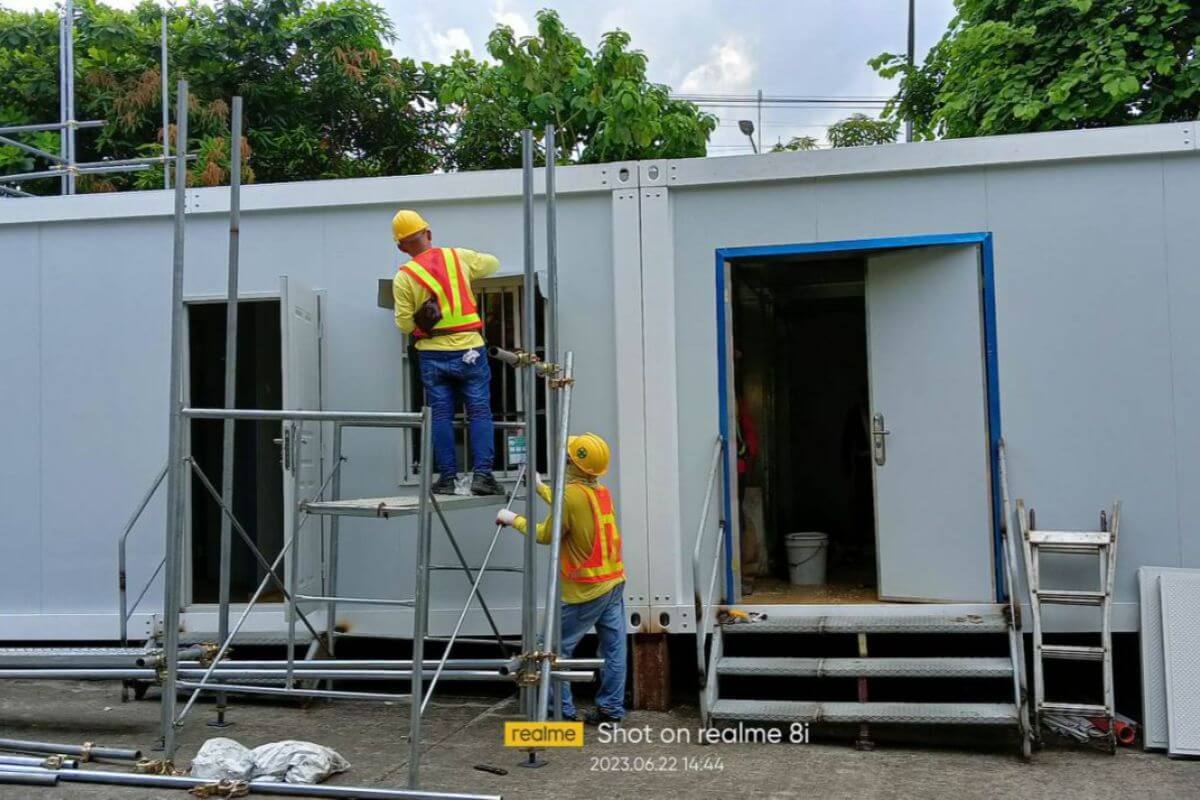
Industries that we serve opt for expandable prefab buildings, including our expandable container solutions, for a range of practical and operational advantages.
Speed
Off-site assembly runs in parallel with site preparation, shortening project timelines from months to weeks and enabling faster operational readiness.
Cost Efficiency
Factory-controlled production reduces labor and material waste by 20–30%, delivering durable structures with lower long-term maintenance costs.
Flexibility
Modular expandable containers can be scaled, relocated, or reconfigured with ease, allowing operations to adjust capacity as demand changes.
Sustainability
Precision manufacturing minimizes waste, supports reusable components, and promotes more energy-efficient construction practices.
Minimal Disruption
Rapid on-site deployment limits downtime, helping facilities remain operational while expansion takes place.
Why Indigo Prefab Is the Ideal Expandable Prefab Partner
Indigo Prefab delivers reliable expandable prefab solutions backed by years of industry expertise and a strong track record across residential, commercial, and industrial projects.
Each unit meets certified standards for safety, quality, and compliance. High-quality materials support durability and long-term performance. Efficient processes and a skilled team enable practical completion timelines, allowing clients to rely on consistent and well-executed results.
Key Takeaway
Expandable prefab solutions have become a practical option for industries that require speed, adaptability, and reliability.
Indigo Prefab Houses provides expandable container solutions designed for efficient deployment, durability, and versatile use across various applications.
Explore our expandable prefab buildings in the Philippines today and contact our team for inquiries.
Share on


Most Viewed Posts
Prefab Office vs Traditional Construction: Cost Comparison
Read More
When Does Your Project Need a Modular Office?
Read More
Why Businesses in Cebu City Are Choosing Mobile Offices
Read More
Common Workplace Challenges in Cebu City Construction and Industrial Sites
Read More
What to Consider Before Buying a Prefab Container Site Office
Read More